Someone tells me, “Our scheduling is a mess. We need better software.”
Or: “We need a CRM.”
“We need automation.”
“We need AI.”
I don’t start there.
I start with one question:
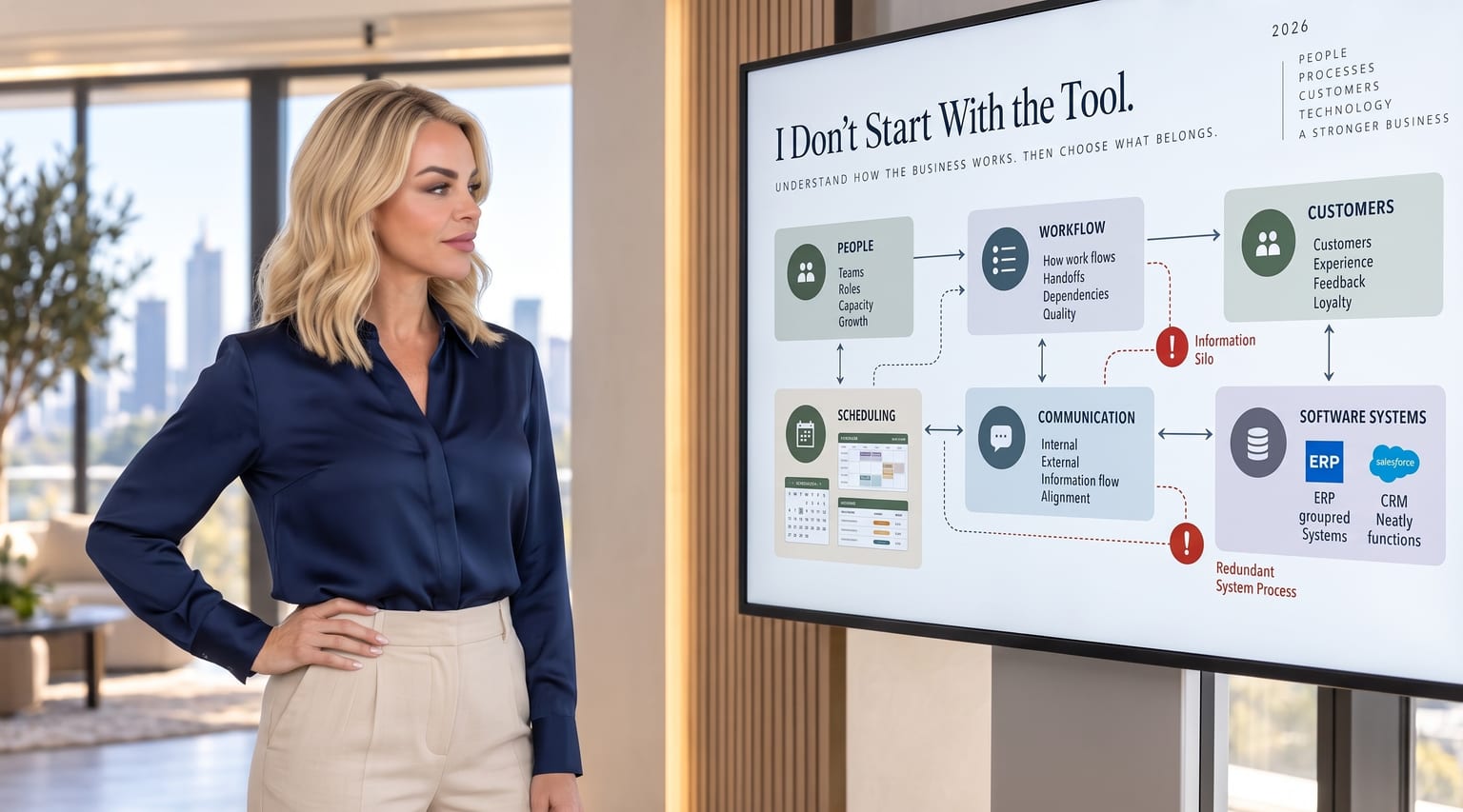
Walk me through what actually happens.
How does the work come in? Who sees it first? What happens next?
Where does the information live? What happens when something is missing? Who has to chase it down?
Where does the customer wait? Where does the owner get pulled back in?
I want to understand the work before I recommend a tool.
Listen to the person closest to the work
The owner matters. Of course.
But the owner does not always see what happens inside every step. The person doing the work every day often knows exactly where things get messy.
They know which information never arrives on time. Which spreadsheet has become a second system. Which task takes three texts and a phone call.
They know what they have to remember because nobody ever built a place for it to live.
And they know what frustrates them.
I listen closely to that part. Frustration is information.
Ask what easier would look like
One of my favorite questions is:
If I could snap my fingers and make this easier, what would you want to happen?
Forget what software exists for a minute. Forget what you think is possible. Tell me how you wish the work went.
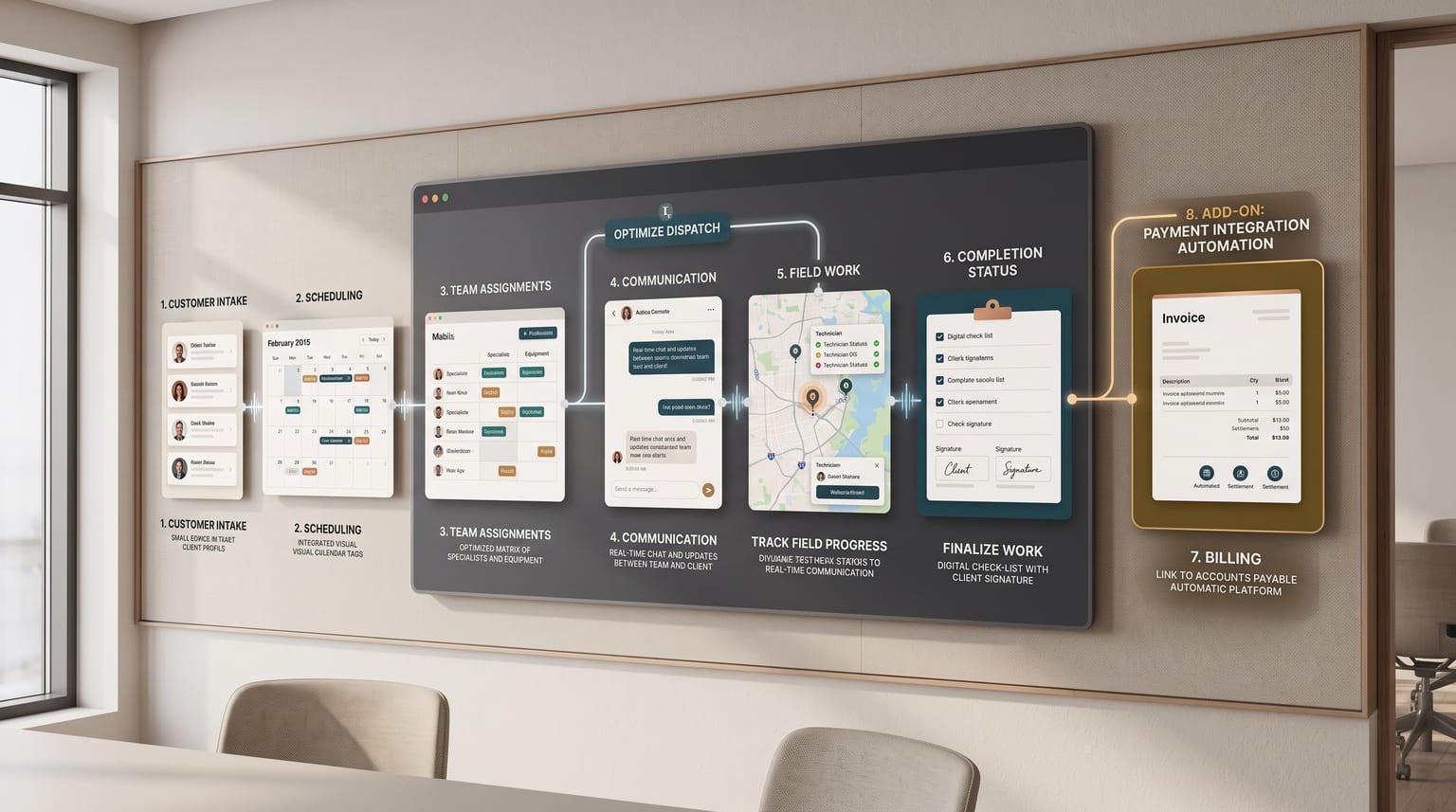
Maybe a new job would arrive with everything the team needs already attached.
Maybe the person scheduling it could see who is available without texting five people.
Maybe the owner could open one place and see what is finished, what is late, and what needs attention.
That tells me more than a software wish list. It tells me the outcome we’re trying to create.
Find the right fit
There are plenty of systems available: CRMs, scheduling tools, field service platforms, automation software, and AI products.
Knowing what exists is only part of the work. The question is which combination fits this business.
Sometimes an existing platform solves most of the problem. Sometimes the platform is fine, but the way work moves around it needs to change. Sometimes two systems need to share information. Sometimes a small automation closes the gap. And sometimes something needs to be built.
I want the simplest strong solution the business will actually use.
If a good platform already handles most of what the company needs, I would use it and solve the remaining gap thoughtfully. And sometimes the answer is that AI does not belong in that part of the business at all.
That matters too.
Make it work for the people using it
I care about how a system feels to use. Not because it needs to be pretty, but because people do not consistently use systems that confuse them.
If someone opens a platform and cannot tell where to go, what matters, or what to do next, that becomes an operating problem.
So I pay attention to the people. How do they communicate? How do they make decisions? What does the owner need to see? How much complexity can the team realistically absorb?
What will they still use after the person who set it up leaves?
I also want to know what happens when things go wrong.
If information is missing, who notices? If an automation fails, who catches it? If someone leaves the company, does the process leave with them?
A system needs someone who owns it and a way to recover when it breaks. Otherwise, a problem can sit quietly for weeks before anyone realizes what happened.
Know what better gives back
A stronger foundation matters. But a business owner also needs to know what it buys them.
Will it save time? Reduce work people have to do by hand? Prevent mistakes? Help the company take on more work without immediately hiring? Protect margin? Give the owner hours back? Improve the customer’s experience?
Those are real outcomes. Some can be measured right away. Others need to be measured after the change is in place.
“This is a better system” is not enough.
What does better give you?
Think deeply. Present simply.
I was reminded recently that I may need to understand an entire business to arrive at one recommendation.
That does not mean the owner needs to see every layer of my thinking. They may simply need to hear:
Here is what I think is happening.
Here is what I would change first.
Here is what I would use, and why.
Here is what it should give back to you.
The thinking underneath can be deep. The answer should be clear.
That is how I have always worked, even before I had language for it.
I see what isn’t connecting. Then I build what belongs in between.
The tool is not the work. Understanding what the business actually needs is the work.
If this way of seeing the work resonates, subscribe for the next essay.